
Research projects supporting this website
SATREPS2023
Selected Infectious Disease Research Topic
『Neglected tropical diseases in Turkey, especially arthropod-borne infectious diseases One Health approach to livelihood』
Stop the spread of infectious diseases caused by arthropods!

Formulation of guidelines and construction of an infectious disease surveillance and warning system
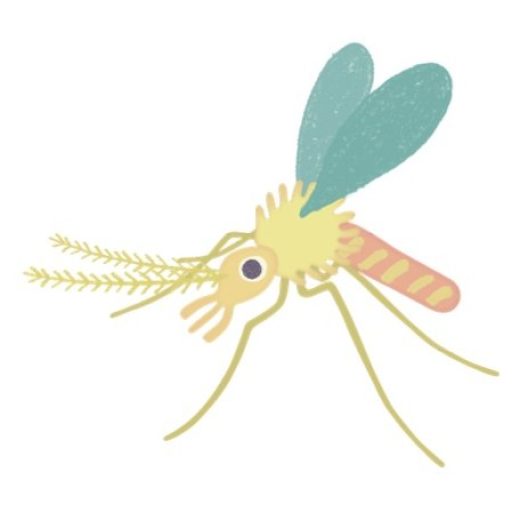
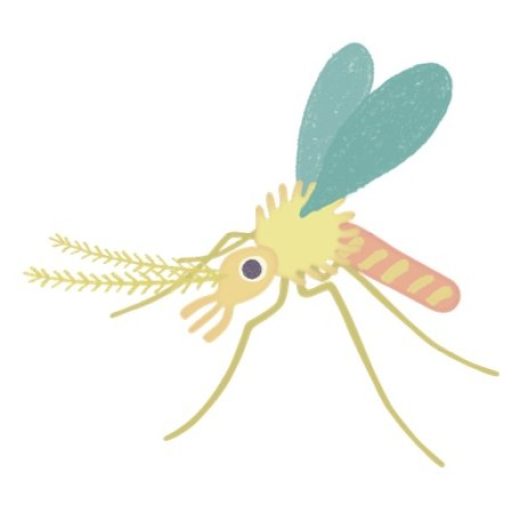
Due to changes in the biota caused by global warming and economic and social activities, infectious diseases transmitted by arthropods can easily spread. In addition to viral infections transmitted by mosquitoes, leishmaniasis transmitted by sand flies also threatens people’s health and causes economic losses in Turkey. In this study, based on scientific knowledge, we will clarify the transmission cycle of these infectious diseases and formulate guidelines for control.
Contributing to the reduction of infectious disease outbreaks, and the creation of a system that can be applied worldwide
Establish efficient pathogen detection technology and contribute to infectious disease control. Develop technology that can be used to respond to new infectious diseases in Japan that are associated with changes in the distribution of arthropods. The surveillance and warning system and guidelines established in this research will serve as a model case that can be applied to leishmaniasis, a global issue.

Laboratory of Molecular Immunology, Graduate School of Agricultural and Life Science
The University of Tokyo
Associate Professor

Faculty of Medicine, Ege University
Professor


Collaborator

National Institute of Infectious Disease, Department of Medical Entomology Department Manager
In this project, I am in charge of the following three studies.
- We will establish a technology for detecting pathogens of arthropod-borne infectious diseases, and search for pathogenic viruses and unknown insect-borne microorganisms in arthropods living in Turkey.
- We will sort specimens of Turkish infectious disease-carrying mosquitoes and ticks, and conduct molecular biological analysis such as barcoding analysis to collect genetic information that can be used to identify species, as well as establish a molecular classification method.
- We will evaluate the effectiveness of insecticides against arthropods that transmit infectious diseases, and also elucidate the insecticide resistance mechanism. We will consider effective methods of controlling hygiene pests in Turkey.
Based on the above research, we aim to revise the national guidelines for arthropod-borne infectious diseases.
Division of Malaria Immunology, The Institute of Medical Science,The University of Tokyo Professor
Our mission in this SATREPS project, which was planned based on the One-health concept, is to raise awareness of this infectious disease among politicians, medical professionals, and the general public, and to implement measures in line with scientific research.
- Based on monoclonal antibodies and new PCR technology, we will develop a new rapid and easy diagnostic method that can detect all Leishmania species in dogs and humans, and conduct tests for specificity and sensitivity.
- Develop control technologies such as drugs and vaccines to control leishmaniasis in reservoir animals (stray dogs, wildlife, etc.).
- Based on scientific research results, contribute to the creation of guidelines that can be used for the education, diagnosis, and treatment of leishmaniasis in all regions, including Turkey.
Publications
Astri Nur Faizah, Daisuke Kobayashi, Faustus Akankperiwen Azerigyik, Ryo Matsumura, Izumi Kai, Yoshihide Maekawa, Yukiko Higa, Kentaro Itokawa, Toshinori Sasaki, Kris Cahyo Mulyatno, Sri Subekti, Maria Inge Lusida, Etik Ainun Rohmah, Yasuko Mori, Yusuf Ozbel, Chizu Sanjoba, Tran Vu Phong, Tran Cong Tu, Shinji Kasai, Kyoko Sawabe and Haruhiko Isawa
Mosquito populations originating from nonendemic areas have the potential to transmit recently emerging Japanese encephalitis virus genotype IV
Emerging Microbes & Infections 14(1): 2438661
https://www.tandfonline.com/doi/full/10.1080/22221751.2024.2438661
Ekemen S, Nalcaci M, Toz S, Sanjoba C, Demirkesen C, Cetin ED, Tecimer T, Yildiz P, Gursel M, Ince U, Ozbel Y, Coban C.
Diagnostic challenges in cutaneous leishmaniasis due to atypical Leishmania infantum: pathologists’ insights from re-emergence zones
Front Med 11:1453211.
https://doi.org/10.3389/fmed.2024.1453211
Sarkar SR, Hobo R, Shoshi Y, Paul SK, Goto Y, Noiri E, Matsumoto Y, Sanjoba C.
Detection of Leishmania donovani DNA from Oral Swab in Visceral Leishmaniasis
Pathogens 14(2):144.